This Was My First Commissioned Painting, Which I Epically Butchered
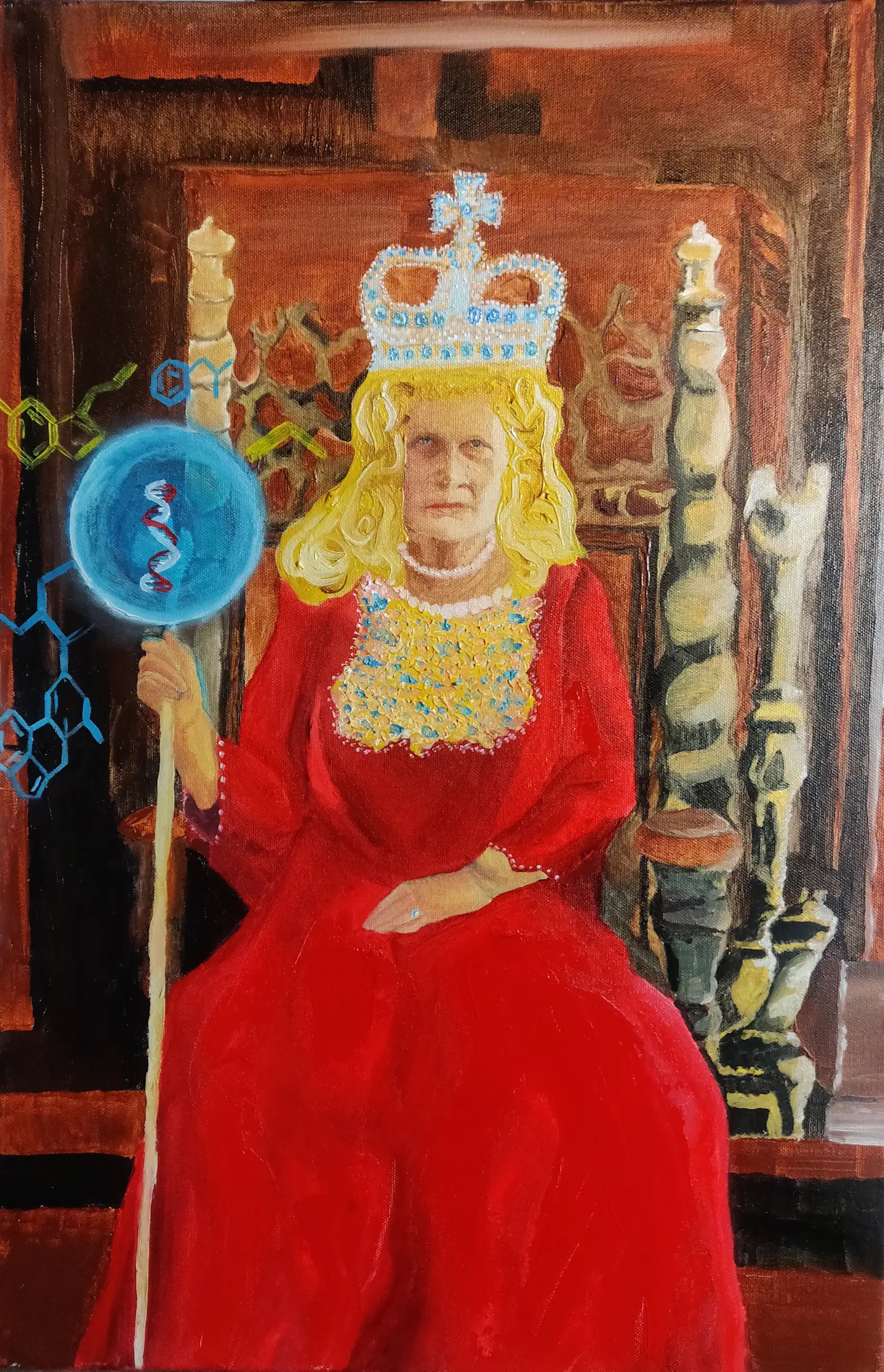
A hand-painted oil portrait “This Was My First Commissioned Painting, Which I Epically Butchered” by the Fart studio. This was my first commissioned...
What the painting shows
The painting shows an older woman styled as a queen, seated on a carved wooden throne. She has long, curly, platinum-blonde hair, a serious gaze and a faint smile. On her head she wears a jewelled crown topped with a small cross, reminiscent of British coronation crowns, and a string of pearls sits around her neck.
She wears a long red gown with wide sleeves. The front of the dress has a richly embroidered gold and pale-blue bodice, and her hands rest folded in her lap. In her right hand (on the left side of the canvas) she holds a tall white sceptre topped with a glowing blue orb. Inside the orb is a red-and-white DNA double helix. Yellow and blue chemical structure diagrams float next to the orb, as if drawn in neon in mid-air.
The background is made of warm browns and rusty reds: wooden panelling, the ornamented back of the throne and two turned, cream-coloured columns on either side. The whole picture blends a classic royal portrait with scientific symbols, suggesting that the sitter is connected to biology, chemistry or medicine.
Technique and style
Oil on canvas in a vertical (portrait) format. This was the artist's first commissioned painting, and he jokingly describes the result as "epically butchered". It mixes realistic portraiture (the face, the pearls, the fabric) with flat, illustrative additions such as the glowing chemical diagrams. The crown and the bodice are painted with thick dots of paint that imitate gemstones.
At a glance
- Medium: oil paint
- Surface: canvas
- Orientation: portrait (vertical)
- Dominant colours: red, gold, light blue, rusty brown, cream
- Subjects: portrait of an older woman, queen, crown, throne, DNA sceptre, chemical structures
Fun fact
The iconic villain of the 1987 film Hellraiser, which gave this painting its nickname, was never called Pinhead in the script or the credits. He was officially the "Lead Cenobite". The name Pinhead came from the film crew and fans, and creator Clive Barker disliked it for years before it ended up in the credits of later sequels.
Want a similar painting?
The Fart studio paints commissioned artwork: portraits of people and pets, landscapes and absurd scenes like this one. You can order a similar piece featuring portrait of an older woman, queen, crown, starring your own pet, a loved one or your favourite place. Just describe your idea in the contact form and attach a photo.